Faith and the Incarnation
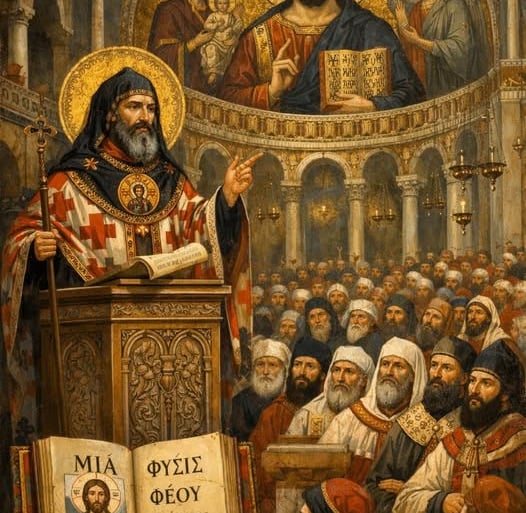
This blog presents a powerful opening homily of St. Severus of Antioch, in which he lays the unshakable foundation of Christian life: right faith rooted in the true Incarnation of the Word. Delivered as a programmatic cathedral sermon, the homily calls the faithful to steadfast confession, warns against dividing Christ after the union, and proclaims the saving mystery of one incarnate Word made flesh. Both pastoral and theological, it invites readers to rediscover why faith in the undivided Christ is not merely doctrine, but the very ground of salvation.
SAVERIO'S OF ANTIOCH
1/125 Homily of St. Severus of Antioch
12/9/20254 min read
Faith and the Incarnation:
St. Severus of Antioch on the Unshakable Foundation of Salvation
Among the great shepherd-theologians of the Syriac tradition, St. Severus of Antioch (†538) stands as a towering witness to the Church’s confession of the mystery of Christ. His Cathedral Homilies were not abstract theological exercises but living proclamations delivered to the faithful, shaping belief, worship, and perseverance amid doctrinal turmoil.
This first cathedral homily functions as a programmatic opening sermon. From the very outset, Severus establishes two inseparable truths:
Right faith is the foundation of all Christian life, and
The Incarnation of the Word is the definitive criterion by which all teaching must be judged.
What follows is both instruction and exhortation—addressed directly to the faithful, yet implicitly confronting those who distort the mystery of Christ by dividing Him after the union.
Faith as the Foundation of Salvation
Severus begins by grounding Christian existence itself in faith. Faith is not presented as a secondary virtue or an optional confession, but as the very foundation of salvation. Without faith, righteousness cannot mature, hope cannot endure, and the promise of eternal life remains unattained.
Crucially, Severus defines faith not as mere verbal assent, but as the firm and unwavering commitment of the soul to divine revelation. This emphasis reflects the pastoral urgency of his time: confessions spoken with the lips but contradicted by divided Christologies were not, in his view, true faith at all.
Faith, therefore, is both received and guarded—received from the apostles and guarded against innovation disguised as piety.
The Apostolic Faith and the Incarnate Word
Severus reminds his hearers that the faith of the Church does not originate in human reasoning or philosophical speculation. It is the faith handed down from the holy apostles, who were taught directly by the Word Himself.
This apostolic origin is decisive, because the apostles did not merely receive doctrines about Christ—they encountered the Word who descended and dwelt among us. Any teaching that alters this inheritance, however subtle, is a departure from the Gospel.
The True Incarnation and the Undivided Christ
At the heart of the homily lies Severus’s uncompromising confession of the Incarnation.
The Word of God, eternally with the Father, did not:
appear only in semblance, nor
dwell in a man as in a prophet.
Rather, He Himself truly became flesh.
In a formulation characteristic of Severus, the Incarnation is described as follows:
Remaining what He was, He assumed what He was not.
The Word united to Himself a real human body, endowed with a rational soul. This union produced one Christ, one Son, one Lord—not by honor or cooperation of will, but by a true and ineffable union in which the flesh became the Word’s own.
Because of this union:
the sufferings truly belong to the One who suffered in the flesh, and
the glory belongs to the same One who is eternally glorified with the Father.
Any attempt to divide Christ after this union, Severus insists, destroys the very mystery of salvation. A divided Christ yields a divided redemption—and a divided redemption renders faith empty.
A Pastoral Warning and a Saving Confession
Severus’s warning is severe, but pastoral in intent. To separate what God has united is not merely a theological error; it is a rupture at the heart of salvation itself.
In response, he calls the faithful to hold fast to the Church’s saving confession:
One incarnate nature of the Word of God—
not confused,
not changed,
yet truly made flesh.
This confession, he reminds them, is not novel. It is:
the faith of the Church,
the faith of the martyrs, and
the faith by which believers hope to stand before the judgment seat of Christ.
The Homily Text
HOMILY 1: On Faith and the Incarnation
(Cathedral Homily of St. Severus, Patriarch of Antioch)
Faith, beloved brethren, is the firm and unshakable foundation upon which the whole edifice of our salvation is raised. Without faith, neither righteousness is perfected, nor hope made secure, nor the promise of life attained. For faith is not a mere utterance of the lips, but the steadfast assent of the soul to the truth that has been revealed by God.
This faith we have received from the holy apostles, who were taught not by human wisdom but by the Word Himself, who for our sake descended and dwelt among us. Therefore, let no one presume to alter what has been delivered, nor to introduce foreign teachings under the guise of piety.
For the Word of God, who is eternally with the Father, did not merely appear in semblance, nor did He dwell in a man as in a prophet, but He Himself truly became flesh. Remaining what He was, He assumed what He was not. He united to Himself a real body, endowed with a rational soul, and thus became one Christ, one Son, one Lord.
We do not divide Him after the union, nor do we speak of two sons or two persons. For the union was not one of honor, nor of will alone, but a true and ineffable union, by which the Word made the flesh His own. Therefore, the sufferings belong to the One who suffered in the flesh, and the glory belongs to the same One who is glorified with the Father.
If anyone dares to separate what God has united, let him know that he tears apart the mystery of salvation itself. For if Christ is divided, then redemption is divided; and if redemption is divided, then faith is rendered void.
Let us therefore hold fast to the confession that saves: one incarnate nature of the Word of God, not confused, not changed, yet truly made flesh. This is the faith of the Church; this is the faith of the martyrs; this is the faith by which we live and by which we hope to stand before the judgment seat of Christ.
May God grant us to persevere in this confession without wavering, so that, being united to Christ in faith, we may also be united to Him in glory.
Concluding Reflection
This opening cathedral homily sets the tone for all that follows in Severus’s preaching: faith rooted in apostolic truth, Christ confessed without division, and salvation guarded through right confession. It is a reminder that theology, for the Church, is never speculative alone—it is the safeguarding of life itself.
In an age still marked by confusion about the person of Christ, the voice of St. Severus remains strikingly relevant: hold fast to the faith that saves, for in the undivided Christ alone is our redemption secure.
Source: Les Homiliae Cathedrales de Sévère d’Antioche